
In a hasty move and without consultation, the Nicaraguan National Assembly approved Law 1264, the Law on Special Economic Zones (SEZs) for the Belt and Road Initiative. With it, the Ortega-Murillo dictatorship is implementing the provisions of Article 161 of the Constitution, which came into force at the beginning of the year, adapting it to China’s New Silk Road policy, with which it is expanding its geopolitical offensive to establish itself as the leading economic power in world trade, in opposition to the United States.
Following its publication in the official gazette, the Ortega-Murillo family, through their son Laureano, took advantage of their strategic alliance with China to invite Chinese companies to use what they call a new tool to attract investment, which they claim will boost trade and job creation.
This comes at a time when, due to repeated breaches of the Free Trade Agreement between the United States, Central America, and the Dominican Republic, known as DR-CAFTA, Nicaragua is at risk of losing the benefits of the agreement or having tariffs of up to 100 percent imposed on the products it exports to the United States, a market that historically purchases more than 50 percent of its total exports.
To try to compensate for the damage that will be caused by losing that market as a result of the management of trade relations with the United States, the dictatorship is offering the Chinese all kinds of tax exemptions and other benefits in an attempt to replace its main trading partner with them.
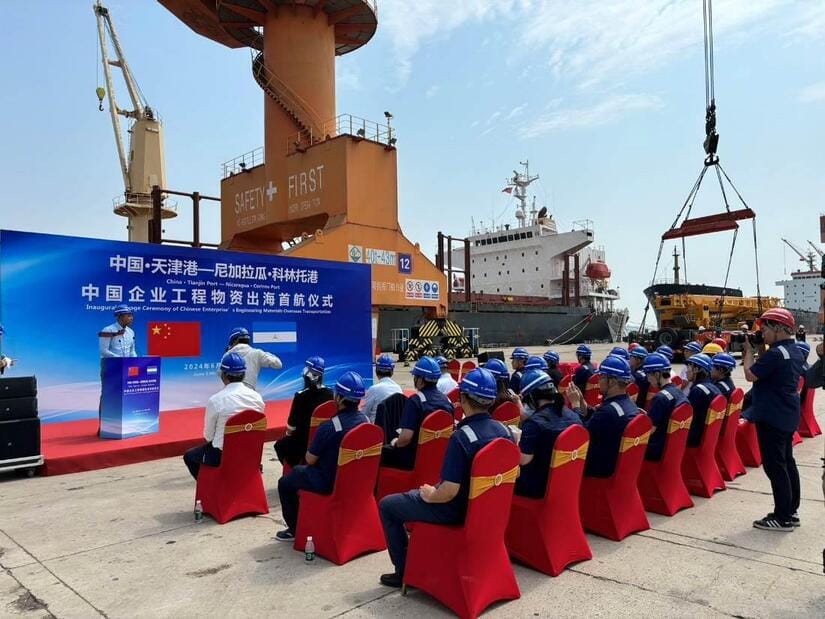
The benefits of the SEZs
The benefits of the SEZs are in addition to those of the Free Trade Agreement (FTA), in force since January 2024, which only guarantees a market for less than 2 percent of total exports. But it has increased the trade deficit, as imports from China now account for 16 percent of the total.
The economy is governed by its own rules, which stubbornly reject accommodation for geopolitical interests outside the market. This is a lesson that Ortega and Murillo had learned back in the 1980s, but have selectively forgotten it to manipulate national opinion, making people believe that they can resolve the crises generated by their permanence in power at any cost.
The Chinese have sustained their growth through a large-scale production model geared toward exports, which requires minimal imports of consumables. This strong anti-import bias is also supported by the population’s low consumption capacity, which is below the global average, a reality that is not very flattering for the dictatorship’s purposes. Furthermore, repackaging Chinese products for shipment to the US market, in addition to the legal risk involved, requires the opening of that market through DR-CAFTA.
The experiences of Africa and Latin America with SEZs are not as satisfactory as countries had hoped, and they are a new form of colonialism because they function as authentic enclaves, separated from national sovereignty and administered by companies from the new world power.

SEZs pose serious risks
In the absence of national regulation, SEZs pose serious social, environmental, and economic dependency risks. They hire few local workers because they bring almost all the administrative and technical experts they need from their own country, limiting technology transfer. In addition, they pay low wages, offer poor working conditions, and do not generate tax revenues, which are replaced by bribes.
Furthermore, SEZs increase the risk of a structural dependency relationship where all decisions are made in Beijing, weakening not only the political but also the economic sovereignty of the nations involved in these projects.
The negotiation processes between governments and Chinese companies encourage corrupt and non-transparent practices. Local communities do not participate in consultations or decision-making, nor do they receive any benefits from these projects, which they can only observe from afar.
The Nicaraguan Democratic Coalition (CDN) is concerned that Nicaragua will fall into the trap of Chinese debt generated by the installation of its enclaves, as has happened in Ecuador, Zambia, and Sri Lanka, which have increased their debt to such an extent that in some cases they have required bailouts from the World Bank (WB) or the International Monetary Fund (IMF).
The Ortega Murillo dictatorship portrays China as the ideal lender to replace international financial institutions (IFIs). Nicaragua’s debt to China already exceeds $1.2 billion, but the benefits are only for those in the circle of power and their associates. If they now hand over the enclaves they are demanding, that debt will continue to grow and mortgage the future of Nicaraguans.
SEZs: Chinese illusions and debt diplomacy
Like a rabbit pulled out of a magician’s hat, the Ortega-Murillo dictatorship has unveiled its latest sleight of hand: Special Economic Zones (SEZs). Gone are the telecommunications satellite, the Supremo Sueño de Bolívar refinery, and the pharaonic Interoceanic Grand Canal, which according to the original plans should be in its sixth year of operation.
In addition to the low probability that the SEZs will materialize, it remains doubtful whether they would help solve the most pressing problems of Nicaraguans. Above all, those handed over to Chinese businessmen will contribute little or nothing to generating jobs and sustainable sources of income, which are by far the most pressing needs of Nicaraguans.
SEZs are the main driver of China’s development, but they cannot work in Nicaragua because the conditions that guaranteed their success in some countries are absent. The Chinese understood that their centralized economy would not generate the growth demanded by their population.
Following the example of other Asian countries, China adopted an aggressive policy to attract investment, based on incentives for foreign investment, offering a favorable business environment with clear, stable rules and respect for private property, as long as it was shared with the Communist Party. It promoted the opening of markets, investment in high technology, and took advantage of the abundant cheap labor it had at the time.
Nicaragua does not offer these conditions, and no serious investor will establish themselves in a country where the rules, including the Constitution, are constantly changing, property is confiscated, and there is no rule of law.
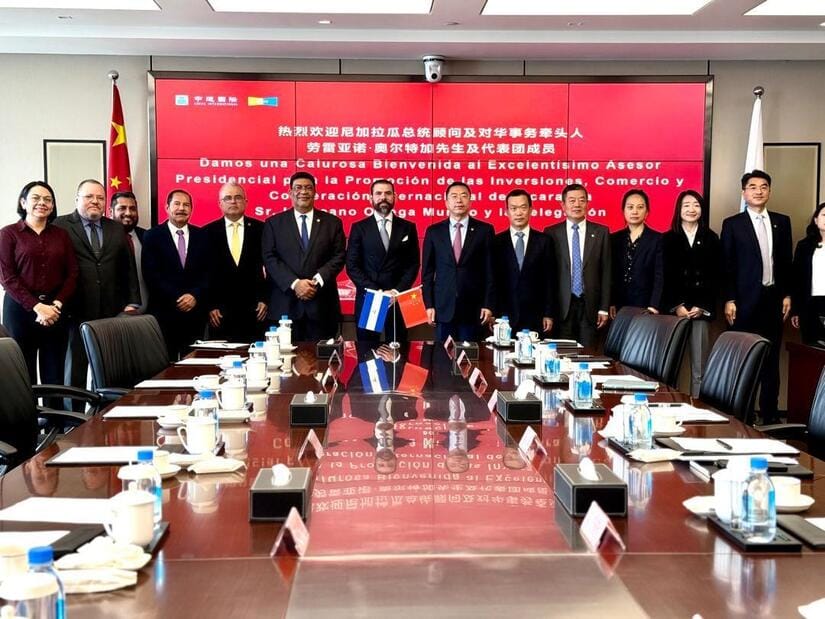
Economic Zones Outside China
With its actions, the dictatorship is closing commercial opportunities, and high-tech investments are being redirected to safer locations against which Nicaragua cannot compete due to unfavorable conditions. Those who may come to Nicaragua are Chinese investors, like those scattered throughout the world, who have generated very negative results.
A common feature of SEZs that operate outside China but are controlled by it is the isolation of the enclave from the local economy. They import labor and everything else they need to operate from China. The hiring of local workers and interconnection with the host country is almost non-existent.
But the most worrying thing is the inequality they will generate. While local investors face fiscal harassment from the General Revenue Directorate (DGI) and the General Customs Services Directorate (DGA), which impose millions in fines and excessive value doubts, Chinese investors will enjoy full exemption. While small, medium, and large Nicaraguan entrepreneurs will retain the VAT they charge their customers and pay income tax (IR), the Chinese will not have these tax obligations.
Local business owners will pay the highest energy prices in Central America, while Chinese businesses will receive subsidies and even have access to public land to establish their businesses, while locals will have to purchase land at market prices and pay the corresponding taxes. In addition to the injustice that this discrimination entails, it introduces distortions into the economy by creating unequal rules for entrepreneurs who should be treated without bias or exclusion.

SEZs will not solve the problems
SEZs will generate fewer benefits than those announced by officials of the dictatorship, who predict growth rates of up to 8% per year, a projection that is far from reality and from the current growth generated by strong exports and family remittances, variables whose future sustainability is at risk.
Furthermore, if the US market closes due to restrictive rules of origin, SEZs will not be able to become platforms for exporting Chinese products and will have to seek other markets.
They will also incur the same costs associated with Chinese interventions, which are high indebtedness resulting from its debt diplomacy, environmental damage, and labor abuses.
The Nicaraguan Democratic Coalition (CDN) believes that Nicaragua needs much more than the illusion of SEZs, which are nothing more than large-scale free trade zones, in order to prosper. The history of developed nations has shown that they achieved this through the creation of clear, predictable, stable, and equal laws and rules for all, without economic discrimination or bias of any kind, with transparency and by tackling corruption.
For Nicaragua to prosper, it must invest in quality education to produce highly skilled and productive people who can access quality jobs and wages. But it is also essential that there be unrestricted respect for property, individual, political, and social rights. However, none of these conditions are currently being met in Nicaragua, and therefore there is no possibility that the SEZs will help solve the serious problems facing Nicaraguans.