
Listening to Daniel Ortega talk about the extraordinary relationship he has with China has become a cliché. One wonders what benefits the Nicaraguan people derive from this alliance. But in the best tradition of old-school politicians, what he says are just words intended to sell a lie that, if repeated often enough, will become reality.
According to Laureano Ortega, this relationship, which his father, Daniel Ortega, defines as extraordinary, is based on three pillars: the Chinese development agency, the promotion of trade and investment, and strategic projects with large companies.
By analyzing each of these pillars and taking into account what has happened over the course of the year, we will determine what the people have gained and at what cost.
With the first pillar, the China State Construction Engineering Corporation delivered the first phase of the Nuevas Victorias project, consisting of 920 one-story, two-bedroom houses built in Managua under a non-reimbursable cooperation agreement.
But what should have been a donation to 920 families became a business from which the Ortega-Murillos are profiting by selling the houses, a business that also constitutes unfair competition for private developers.
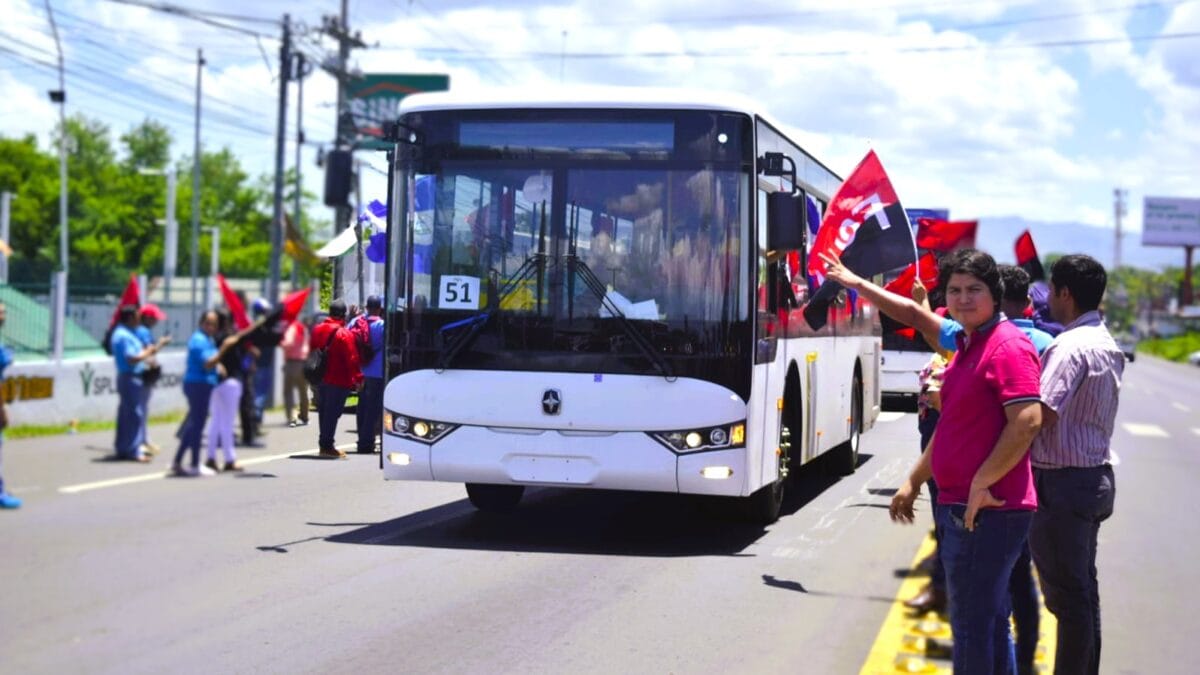
Chinese buses
Something similar is happening with the 100 buses donated by China that were sold to transport cooperatives, but here the deal is even bigger. This year, in addition to the units they already received, they signed a contract to purchase 548 buses costing around $50 million.
These contracts lack transparency. The Ortega family decide what to buy, where, and at what cost, and obviously, no one knows what extra cost they charge for their own benefit. With this contract, the number of Chinese buses that the country acquires to sell to the cooperatives reaches 2,500.
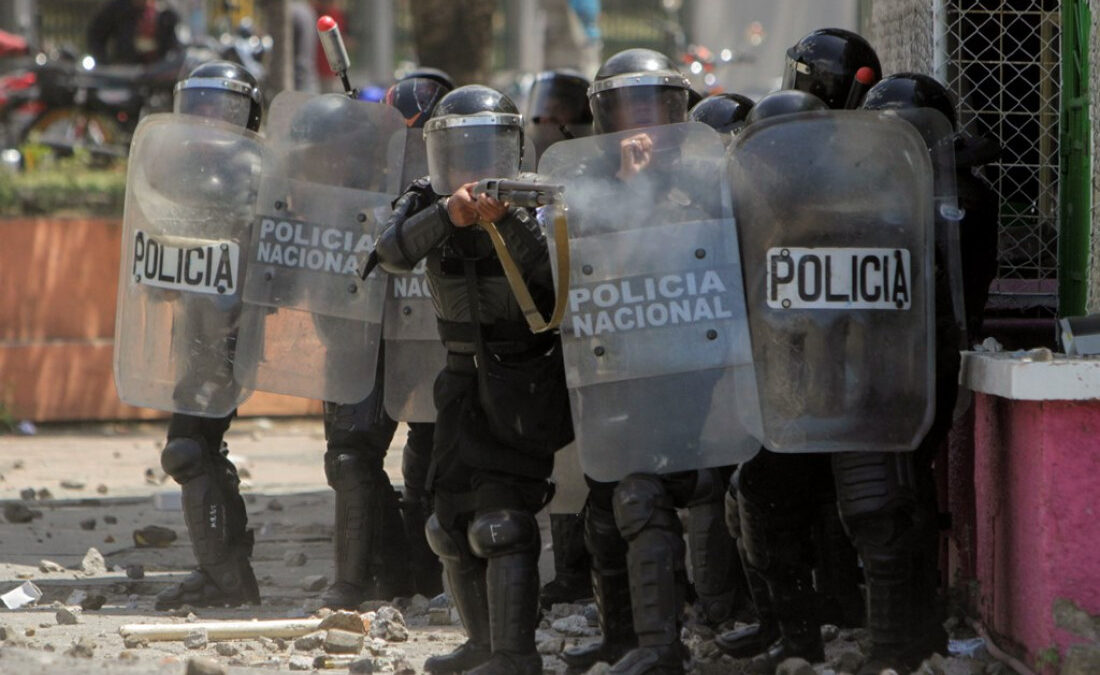
A third donation that did materialize is 20 motorcycles for Ortega’s police force, which received them without having to purchase them. Obviously, they do not charge their repressive apparatus.
With regard to the second pillar, it is important to note that between January and May, Chinese imports totaled approximately $783 million, while exports totaled only $69 million. In other words, the country buys 11 times more from China than it sells to it, reflecting a disproportionate trade surplus in China’s favor. With the United States, on the other hand, it is the other way around: Nicaragua sells eight times more to the US than it buys from it.
Furthermore, Chinese imports rose from representing around 7% of the total in 2006 to 19% in 2024, almost reaching the same level as US imports. This jeopardizes our relationship with the United States, our main trading partner, because business with China is conducted in blatant unfair competition with American and Western companies, whose products are being displaced by Chinese ones, most of which are of low quality.
Even more serious is the fact that the growth of Chinese imports has led to the proliferation of businesses of all kinds and products that compete with Nicaraguans. As a result, through money and/or threats, Nicaraguan merchants are being devoured and displaced by the Chinese, who have the backing of the dictatorship, thus leaving Nicaraguans with no possibility of legal defense.
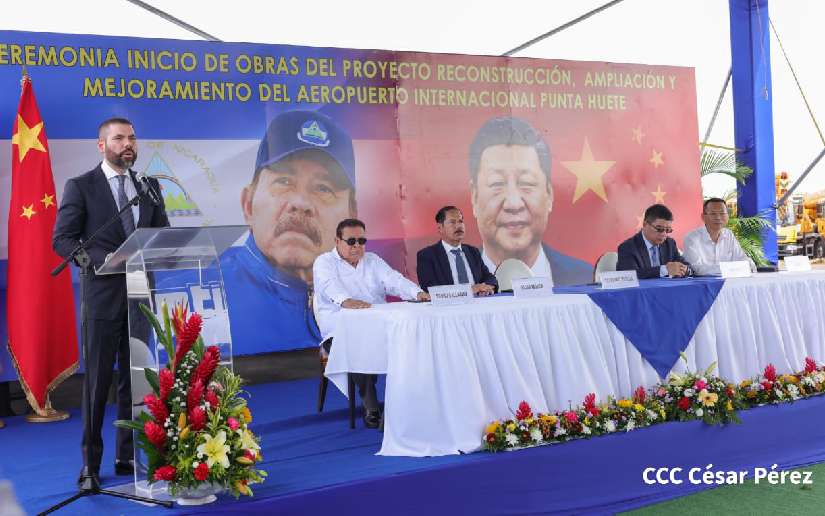
Mining and telecommunications concessions
In this same area, between May and September, the Chinese received almost 20 mining concessions covering more than 300,000 hectares, and in total, in the last two years, they have been granted around 30 concessions covering more than 3 million hectares.
Like the merchants, Nicaraguan artisanal miners are unable to defend themselves against the Chinese companies that are displacing them.
Under the third pillar, contracts were signed this year to develop a digital connectivity project to: install and operate a logistics center in the port of Corinto, supply military equipment and technology to the Army, and also the aforementioned contract for the purchase of buses and other machinery.
None of these contracts go through the public bidding process, they are completely lacking in transparency and therefore prone to corruption, and several of them engage in unfair competition with private companies that provide the same products or services.
With the digital connectivity project, they created a third state-owned mobile phone competitor, which will blatantly use the infrastructure of private companies offering the service.
It is worth noting that several families were recently expropriated to develop the logistics center in the port of Corinto.
According to these results, for the Nicaraguan Democratic Concertation (CDN), what Daniel Ortega defines as an extraordinary relationship is nothing more than smoke and mirrors for Nicaraguans, resulting in donations that are sold, displaced merchants, poor-quality products, low job creation, expropriations and displacement of communities, high-interest debt, non-transparent operations, and the contraction of the private sector. Furthermore, they jeopardize relations with our main trading partner, the United States, and the only winners in political and economic terms are the Ortega Murillos.
The other side of Nicaragua: tourism between natural beauty and political repression
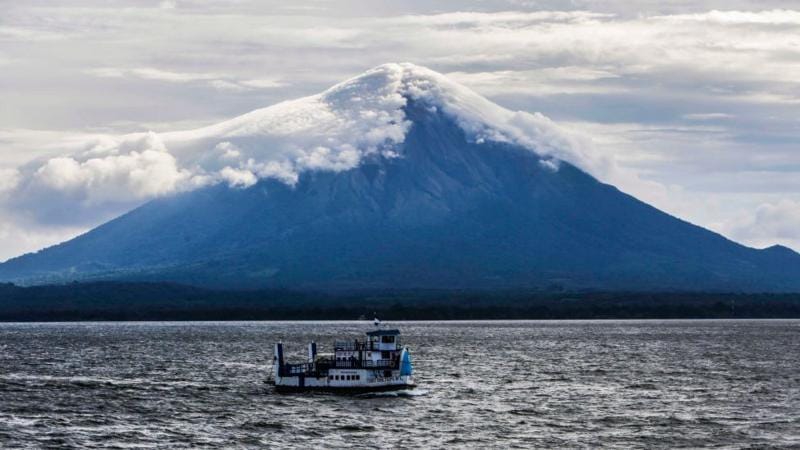
Nicaragua often appears in international travel magazines, which recommend it as an irresistible destination with pristine beaches, imposing volcanoes, colonial architecture, and a vibrant culture that attracts travelers from around the world and motivates them to visit the country. These natural, cultural, and historical attractions, while remarkable, present only some aspects of Nicaragua’s reality.
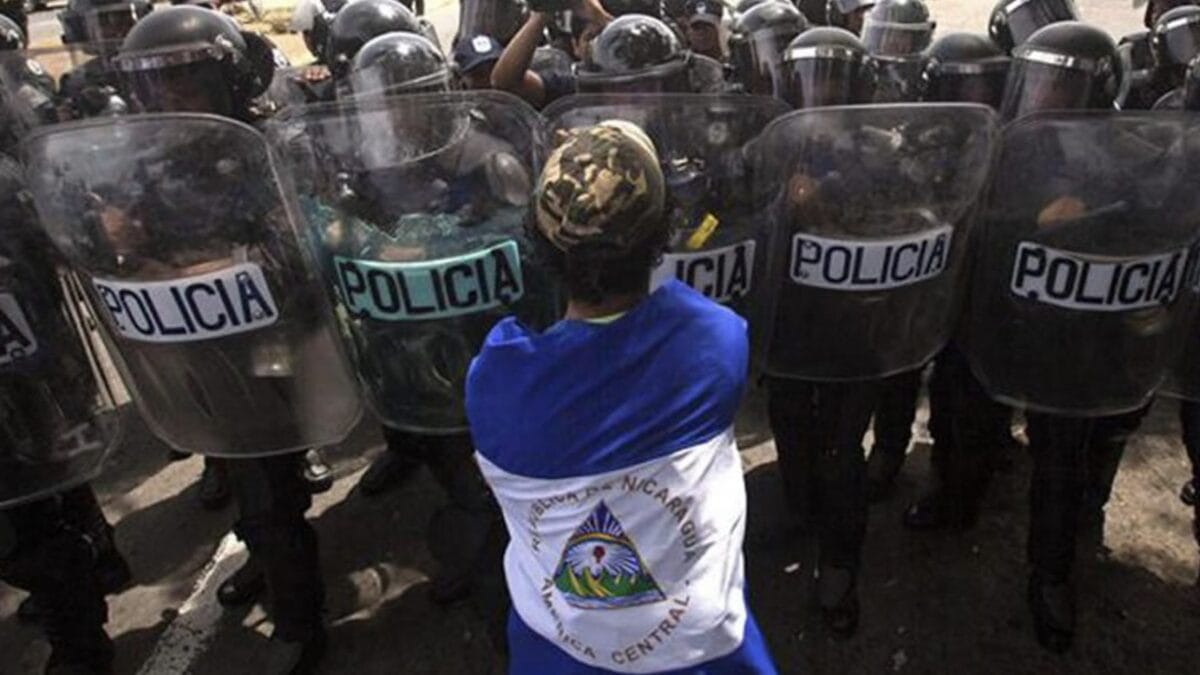
What many of these reports omit is that Nicaragua lives under a totalitarian regime, led by dictators Daniel Ortega and Rosario Murillo, who have dismantled civil liberties, democratic institutions, and the rule of law. They persecute, imprison, and denationalize anyone they consider to be an opponent. They torture and murder political prisoners; they shut down independent media outlets, and they control the narrative about the reality of the country with an iron fist.
Dictators have turned tourism into a carefully managed and skillfully manipulated showcase. They only allow certain influencers and sympathetic or hired media outlets to enter the country, so that they can paint an idyllic picture, while silencing the voices of those who suffer daily repression.
This contrast raises an unavoidable ethical question: what responsibility do international media outlets have when recommending a destination where natural beauty coexists with serious human rights violations under a regime of terror imposed on the population?
Misinforming travelers
The people and media outlets that promote the Ortega-Murillo dictatorship without presenting the full picture misinform travelers and run the risk of contributing to whitewashing a dictatorship that uses tourism as a tool of legitimization. Furthermore, they expose travelers who visit the land of lakes and volcanoes on their recommendation to serious risks.
Furthermore, they ignore the security alerts issued by some governments, which advise their citizens to refrain from traveling to Nicaragua due to the risks they face within its territory.
The challenge is not to ignore the beauty and other attractions of the country, but to reflect its reality in a comprehensive manner. Responsible travel journalism must include in its publications the stories of the victims of repression, the diaspora, and exile. It must also include the stories of business owners whose property has been confiscated and of a society struggling to keep its identity, freedom, and dignity alive.
Reports should even highlight that many foreign citizens who decide to visit Nicaragua are prevented from boarding their flights because the dictatorship orders the airlines that sold them tickets not to transport them. In these cases, those affected cannot recover the cost of their tickets. This is a measure that generally affects opponents who had to go into exile after the 2018 crisis, but it is increasingly being replicated with foreign visitors. Only by including all these aspects of reality can travel journalism be a vehicle for awareness and not propaganda.
Don’t be fooled
For the Nicaraguan Democratic Concertation (CDN), it is essential that governments, international organizations, and various global actors not be fooled by this biased image that some specialized media outlets spread about Nicaragua. This partial view does not reflect reality and can contribute to wrong decisions being made, in some cases with serious consequences for readers.
Furthermore, it distorts the image of the country, diminishes the international community’s interest in restoring democracy, and causes them to forget their international responsibility to defend human rights and seek justice for victims.
Nicaragua deserves to be seen in all its complexity, with its open, friendly, supportive, and cheerful people, but this is only possible if its citizens enjoy freedom, not while they remain subject to one of the cruelest dictatorships on the American continent. Ignoring their reality is giving dictators Daniel Ortega and Rosario Murillo exactly what they seek: international legitimacy without accountability for their crimes against humanity.
This is the view of US Secretary of State Marco Rubio, who, in his message on September 15 on the anniversary of Nicaragua’s independence, reaffirmed that his country will continue to support the Nicaraguan people’s demands for a free, fair, and democratic Nicaragua, so that we can once again live without fear of persecution or reprisals.