
The United Nations (UN) Group of Human Rights Experts on Nicaragua (GHREN) documented in its report presented on September 23 the systematic and transnational pattern of repression that the Ortega-Murillo dictatorship directs against Nicaraguan exiles. Not limited to arrests, trials, or murders within the country, the persecution extends beyond its borders, forming a system of “long-arm” violations designed to dismantle entire lives and eliminate any form of political opposition.
This pattern includes the elimination of legal identity, exile, denationalization, confiscation of property, harassment of family members, and, increasingly, physical violence against exiles, particularly in Costa Rica.
The arbitrary deprivation of Nicaraguan nationality is one of the most visible mechanisms of this strategy. From February 2023 until the report was released, at least 452 Nicaraguans were stripped of their citizenship through court rulings. The list of those affected includes political leaders, human rights defenders, journalists, religious leaders, and businesspeople. This measure was extended to a large group of de facto stateless persons who, facing precarious migration and economic conditions, find it difficult to survive in exile.
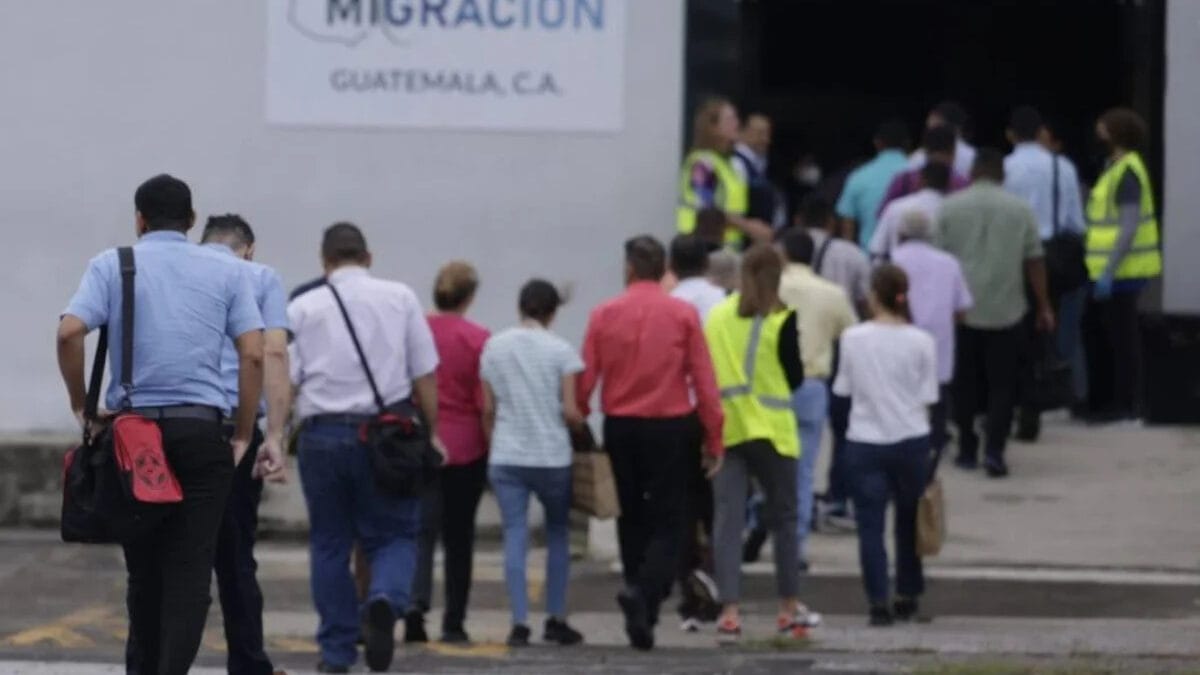
The ban on entry into the country even affects minors, forcing some people to pay bribes or sign “letters of repentance” in order to enter. In 2024, a reform to Law 761, the General Law on Migration and Foreigners, institutionalized this practice by arbitrarily expanding the state’s power to deny entry to nationals and foreigners considered a “social risk.”
Repression creates isolation
Transnational repression also manifests itself through digital surveillance, via a network of social media monitoring, interception of communications, and smear campaigns through “troll farms.” This discredits opponents, affects their asylum processes, and sows fear in exile communities. In Costa Rica and other countries, this has created a climate of mistrust and isolation among Nicaraguans.
The most alarming case is physical violence against exiles, with Costa Rica as the main stage. The June 2025 murder of Roberto Samcam, a retired army major and critic of the regime, marked a turning point.
He publicly denounced the army’s covert role in the repression and the existence of cells operating from the Nicaraguan embassy in that country. His murder by gunshot at his home revealed the lethal extent of cross-border repression. Added to this case are the murder in Honduras of Rodolfo Rojas and two attacks against Joao Maldonado in Costa Rica.
The publication of this report coincides with the investigation by Costa Rican judicial authorities, who point to Pablo Antonio Robles Murillo, a Nicaraguan naturalized in Costa Rica with military training in Cuba and Russia, as the alleged mastermind of Samcam’s murder. He is linked to the Nicaraguan Army through the Directorate of Military Information and Counterintelligence and fought in the Sócrates Sandino Battalion in the 1980s.
The investigation indicates that he met with senior Nicaraguan Army commanders, but he has not been arrested because, according to press reports, he returned to Nicaragua on August 7, 2025.
Repression demands urgent response
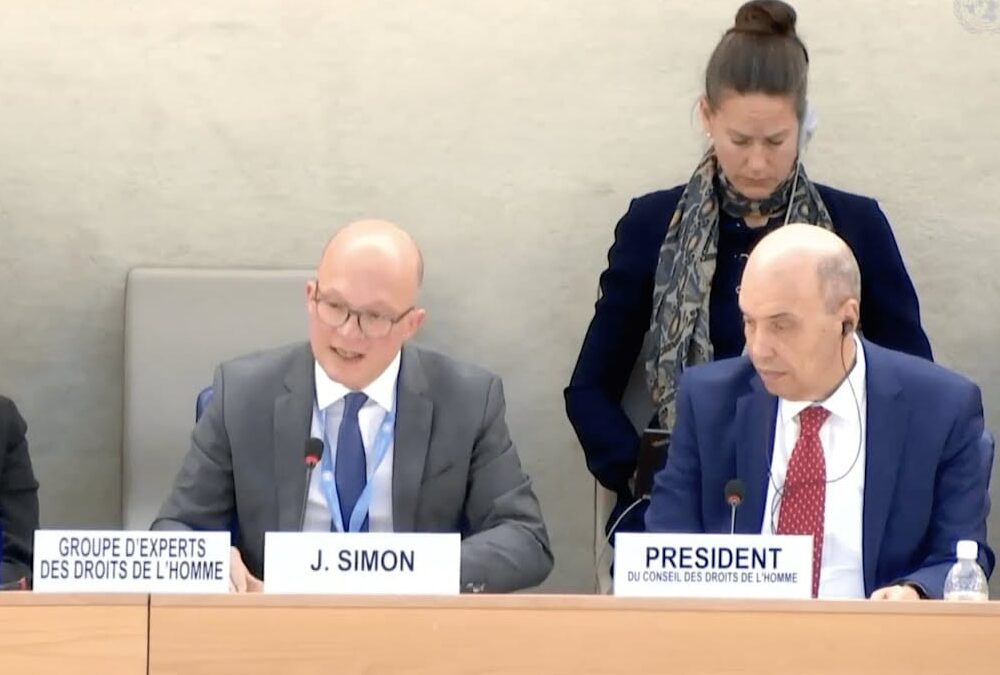
Transnational persecution, most visible in Costa Rica as one of the main destinations for Nicaraguan exiles, is one of the most serious and recent dimensions of repression. The GHREN concludes that the model of expansive repression aims to erase the political presence of the opposition abroad and consolidate a system of impunity and absolute control.
The Nicaraguan Democratic Concertation (CDN) believes that this requires greater international cooperation mechanisms and effective protection for victims. It therefore joins the GHREN’s call to the UN Human Rights Council and the international community to issue an urgent response, based on international law, to counter this transnational repression.
According to GHREN, this would be achieved by implementing comprehensive protection measures for exiles that guarantee fair and expeditious asylum and refugee processes, promoting programs focused on vulnerable groups, including, among other benefits, continued access to education and professional recognition, and extending the protection provided to stateless people by decree.
It would also be achieved by strengthening financial and technical support for civil society and the media; imposing targeted sanctions and conducting investigations to determine individual responsibility and accountability and including transnational violations in the negotiation of bilateral agreements to coordinate responses that curb impunity and protect exiles.
OHCHR confirms worsening crisis in Nicaragua
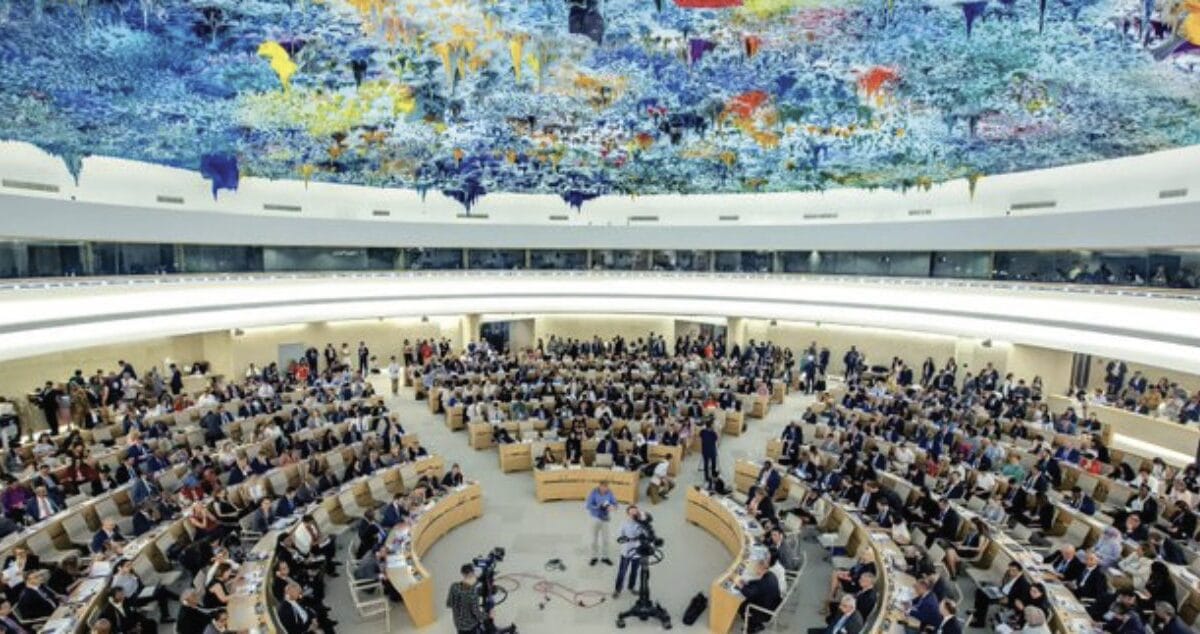
The latest report on Nicaragua presented by Volker Türk, United Nations High Commissioner for Human Rights (OHCHR), during the 60th session of the United Nations (UN) Human Rights Council (HRC), provides a comprehensive overview of the human rights crisis over the past year.
The document is the result of difficult work, because without access to the country, it is carried out remotely and without compromising the rigorous methodology approved in this area. Nor does it have the cooperation of the Ortega-Murillo regime, which has ceased its participation in the HRC.
Despite the obstacles, it assessed the situation in light of international law and national legislation and determined that there is a persistent and alarming deterioration in respect for human rights and the rule of law. It also noted a reality marked by fear of reprisals on the part of victims and witnesses of serious violations, which further hinders its work.
The report highlights the depth of the constitutional reform, which, through an anomalous process that did not comply with the established procedure for such a significant change, modified or repealed 185 of the 198 articles of the previous Constitution.
This amounts to a total reform which, by reducing the legislative, judicial, and electoral powers to entities subordinate to the presidency, violated the indispensable independence of the powers of the state that guarantees democracy.

This reform contributed to the worsening of the situation
With the reform, the failure to comply with human rights obligations was constitutionally ratified. They established a totalitarian and centralized model of government that eliminated fundamental human rights protections, including the prohibition of torture and essential rights to due process.
By eliminating, among other measures, the prohibition of censorship and granting the government broad powers to control the content of the media and social networks, they further violated freedom of expression and of the press.
The analysis details how the new Constitution dismantled the norms that guaranteed the functioning of a democratic republic and elevated arbitrary and abusive practices that were already in use to constitutional status.
It is particularly worrying that, among the patterns of violence and threats used during the detention and imprisonment of individuals considered to be opponents, as documented by OHCHR, sexual violence, physical torture, and ill-treatment stand out.
The description of the abuses reflects inhumane practices. Different forms of torture designed to cause extreme pain, which leave severe consequences for the victims; and reflect the harsh prison conditions faced by political prisoners, many of whom are victims of enforced disappearance.

Nicaragua creates stateless persons
The OHCHR placed special emphasis on the restriction of the right to freedom of movement and nationality. It documented 52 cases of Nicaraguans who, in the last year, were arbitrarily denied entry into the country, both by land and by air. They received no official notification and had no means of challenging the ban, as airlines and land transport companies were directly ordered not to transport them.
Furthermore, it reveals that most of those affected do not report these abuses for fear of reprisals against their relatives in Nicaragua. This suggests that the number of people prevented from entering is higher. In fact, a leader in the tourism sector told a Nicaraguan media outlet that more than 7,000 people have already been affected by this ban.
This figure also does not include thousands of Nicaraguans who, by denying them consular services to renew their passports, were turned into de facto stateless persons. They join the hundreds who were expelled from the country and expressly stripped of their nationality. With these practices, the Ortega Murillo dictatorship turned Nicaragua into a factory of stateless persons.
The Nicaraguan Democratic Concertation (CDN) recognizes the work of the High Commissioner and his staff residing in Panama for their commitment to continue denouncing violations of international human rights and humanitarian law standards in an international context that is negative for their defense.
Furthermore, it considers that the report allows us to remain hopeful that in the future Nicaraguans will receive international protection and that those responsible for these abuses will be brought to justice.