
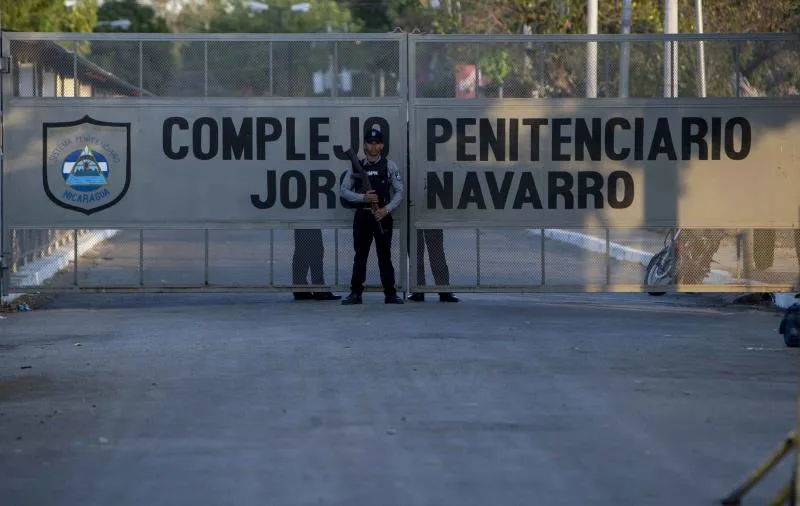
Two political murders in less than a week. Two more families with their lives destroyed by the Ortega-Murillo dictatorship. This new action, as we expressed from the Nicaraguan Democratic Concertation (CDN) in a public statement released when the body of political prisoner Carlos Cárdenas Zepeda was handed over, just three days after that of fellow opposition figure Mauricio Alonso Petri was returned, “constitutes a new form of repression, devoid of the slightest sense of mercy” and “is a clear sign of the moral degradation of those who lead it and their loyalists.”
The Mechanism for the Recognition of Political Prisoners presented its most recent report on September 1. It includes 73 people recognized as political prisoners, 59 men and 14 women; 23 of them are elderly. It should be noted that it does not include many people who are detained, but whose families ask that they not be counted for fear of reprisals from the dictatorship.
A very worrying fact is that of the total, 33 are listed as missing. Since the repressive forces kidnapped them, they have not been presented or allowed to see their families, some of whom have been in this condition for over a year.
Human rights and civil society organizations consider these forced disappearances to be the cruelest form of repression and political imprisonment in Nicaragua. They reflect the suffering of prisoners and their families, who do not know if they are still alive. Now the uncertainty has grown, because political prisoners are not only tortured, they are also murdered.
Repressive measures intensify
In addition to the two murders, we recently heard the testimony of Rosa Ruiz, who courageously denounced that her son, Dr. Yerri Gustavo Estrada Ruiz, kidnapped on August 13, is being brutally tortured.
For this reason, the CDN is making an urgent appeal for the lives of the more than 73 political prisoners to be preserved and respected, for proof of life to be provided for each of the 33 disappeared people and for the torture to stop and the legal obligation to treat them and their families with dignity to be fulfilled.
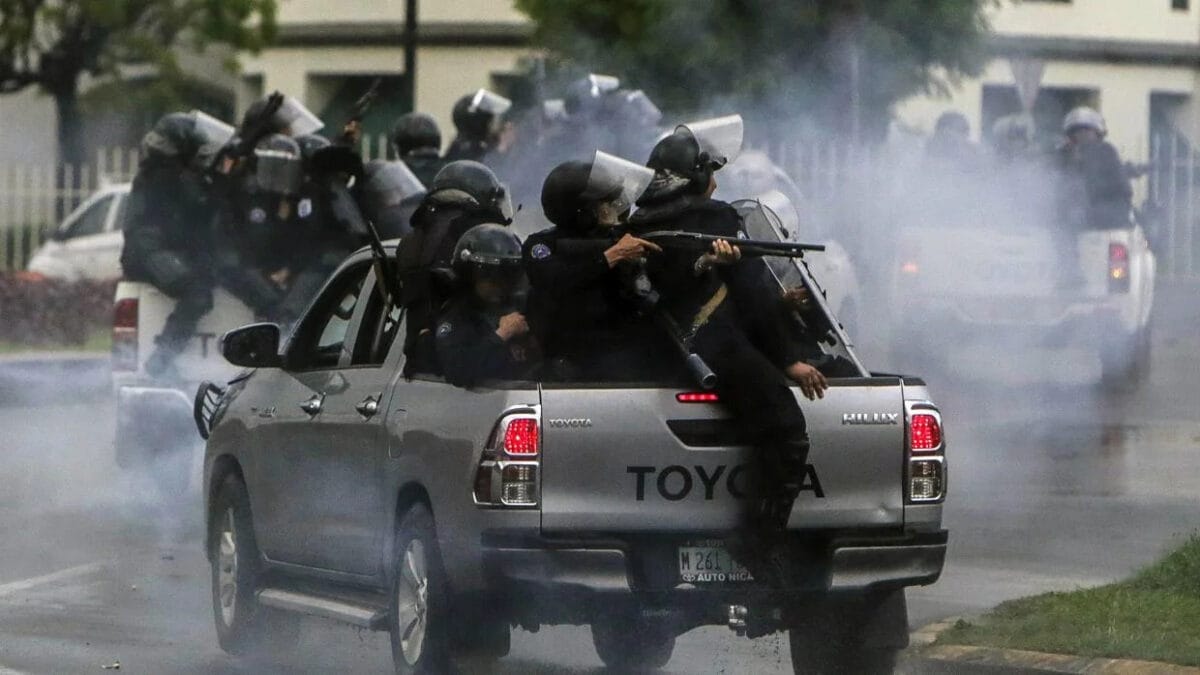
In addition to these brutal acts in prisons, the dictatorship continues with its authoritarian and repressive model, closing democratic spaces and taking absolute control of institutions.
The 2024 Human Rights Practices Report, released in August by the US State Department, concluded that the human rights situation in Nicaragua worsened during 2024.
It also details a number of significant problems, including “credible reports of: arbitrary or unlawful killings, disappearances, torture, cruel, inhuman, or degrading treatment or punishment, arbitrary arrests and detentions, transnational repression against individuals in other countries, serious restrictions on freedom of expression and the press, including violence or threats of violence against journalists, unjustified arrests or prosecutions of journalists, censorship, and serious restrictions on internet freedom; restrictions on religious freedom, human trafficking, including forced labor, significant restrictions on workers’ freedom of association, and the worst forms of child labor.”
Repressive model against churches
It also points out that the authorities did not investigate or prosecute these actions, nor did they take credible measures to identify and punish officials who committed human rights abuse.
To illustrate the magnitude of some of these violations in relation to freedom of the press, it details that, since the beginning of the crisis, 276 journalists have gone into exile, and 56 media outlets have closed. The only information that exists in the country is information from government approved sources. For the Central American Network of Journalists (RCP), Nicaragua is the most critical country in the region for the press.
In religious matters, at the end of August, the seventh edition of the study “Nicaragua: A Persecuted Church” was released, summarizing a total of 1,010 direct attacks on churches, the expulsion of 302 religious leaders, including four bishops from the Episcopal Conference of Nicaragua (CEN), the theft of at least 36 properties, including Radio María, and some 16,563 prohibitions on activities.
Every day, more families suffer because a relative has been murdered, imprisoned, disappeared, or tortured, or because they have been mistreated, forced into exile, prevented from leaving or entering the country, or had their property confiscated.
For all these reasons, we at the CDN, strive every day to denounce, pressure, and demand accountability for these crimes, which must not go unpunished. We urge the international community and the democratic governments of the world to take decisive action to alleviate the suffering of Nicaraguans and restore justice, democracy, and freedom to our country.
The Ortega Murillo dynastic succession, entangled in its authoritarian web
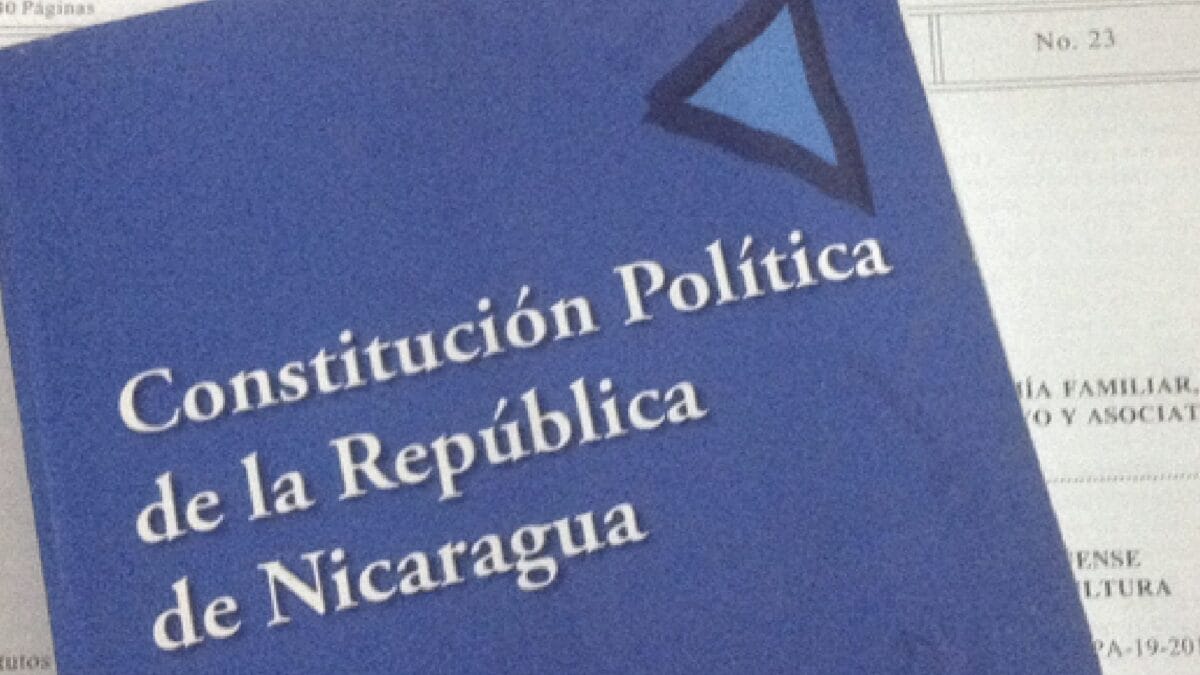
The Constitution in force in Nicaragua since February 2025 introduced a figure unprecedented in Latin America: the co-presidency. According to Article 121 of the so-called “chamuca” Constitution, the “Presidency of the Republic is composed of a co-president and a co-president, who are elected by universal, equal, direct, free, and secret suffrage.” With this formula, they sought to legally consolidate the model of shared power between Daniel Ortega and Rosario Murillo and, at the same time, lay the foundations for a dynastic succession in which, in the absence of Daniel Ortega, power would remain in the hands of the family.
This innovation would be the definitive shield for the regime. They sought legality through an unconstitutional and illegitimate procedure, but the figure lacks legitimacy. Ortega and Murillo were not elected under the new rules, their term is intended to derive from the 2021 elections.
As a result of that electoral process, described nationally and internationally as an undemocratic electoral farce, Ortega took office as president and Murillo as vice president for a term ending in 2026.
Consequently, by acting as co-presidents, both are usurping office. The rule they designed to perpetuate themselves in power became the most compelling evidence of their illegitimacy, because they violate the sine-qua-non condition of the Article 121.
The contradiction between what the Constitution establishes and the way Ortega and Murillo exercise power has profound consequences for their dynastic project. They are trying in vain to change the nature of their positions, which is even more serious for Murillo, who was proclaimed vice president with very limited powers.
Succession would violate other requirements
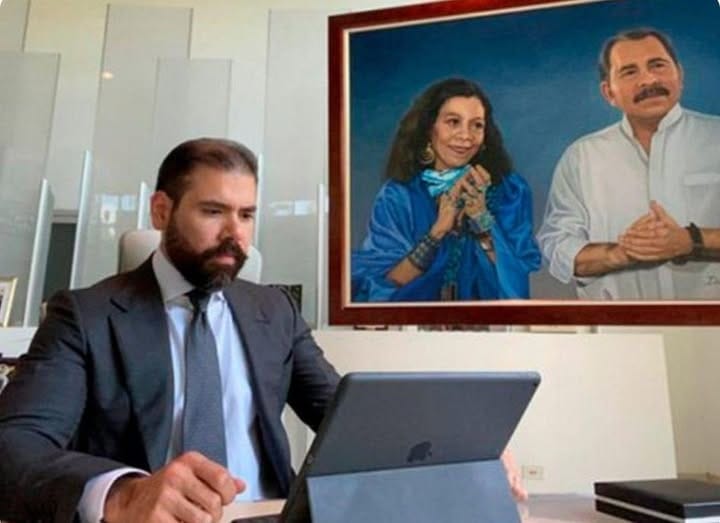
Article 124 of the new Constitution establishes that, in the event of the permanent absence of one of the co-presidents, the other shall complete the term of office. This provision would only make sense if both had been elected under the new rules.
In the absence of this requirement, any attempt by Murillo to prolong her power after Ortega’s eventual departure would lack legal basis. The succession, which should be “automatic,” would be legally challenged and would weaken the framework designed to ensure dynastic succession. This is even more so because, in attempting to achieve a legal impossibility, Murillo renounced her previous status as vice president.
The usurpation of the co-presidency also exacerbates tensions within the circle of power, where rivalries and purges already exist, and opens the door to internal disputes. What should be an orderly transition is turning into a field of uncertainty where, in the absence of a clear and legitimate institutional framework, each faction is claiming power.
Internal struggles would be exacerbated by the fact that Article 126 of the Constitution does not grant vice presidents the power to succeed co-presidents but only allows them to perform the administrative functions delegated to them by the co-presidents. If both co-presidents die before the end of their term, new elections must be held. In order not to weaken her power, Murillo has so far refused to appoint vice presidents, strengthening her totalitarian and centralized model.
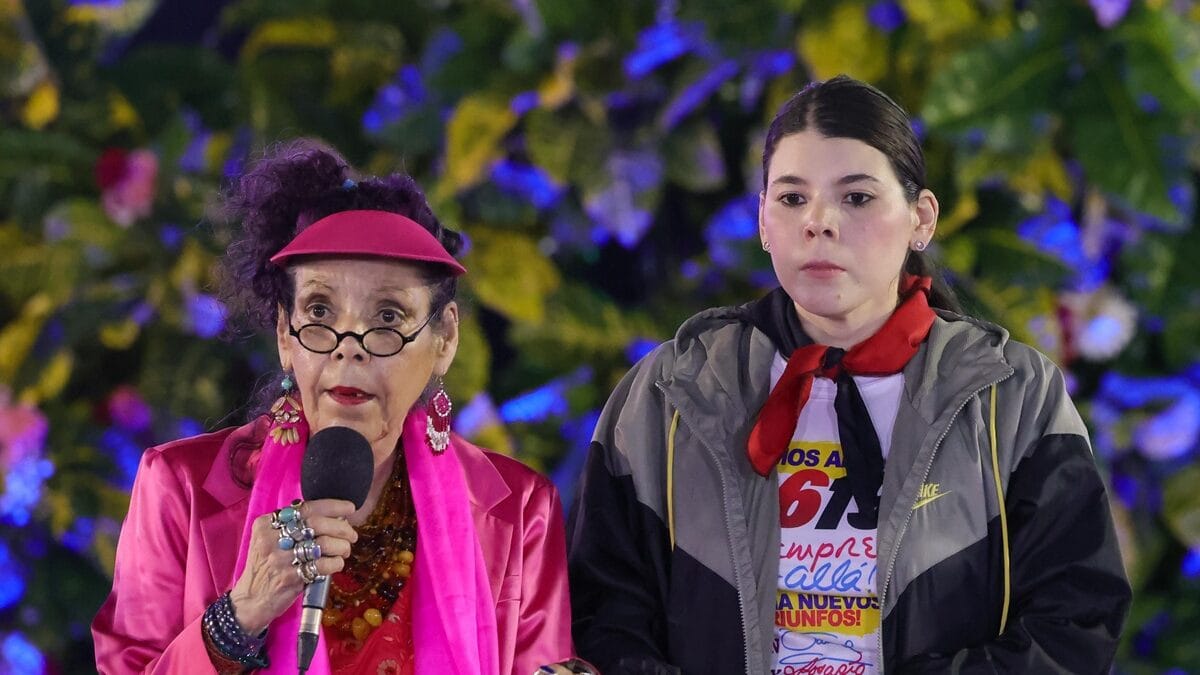
Dynastic succession bogged down
The dynastic project faces a major obstacle: total discredit among citizens, who do not see family succession as the continuation of strong leadership, but rather as the prolongation of a crisis with no way out, and the repetition of a dynastic model similar to that of the Somoza family, which provokes rejection by a large part of the nation.
The usurpation of the co-presidencies reinforces the dictatorship’s international isolation. Ortega and Murillo are acting under a constitutional figure that does not correspond to them. Their illegitimacy of origin and exercise, and the violation of their own constitutional provisions, the result of their legal botch job, is fertile ground for questioning.
The co-presidency model, instead of shielding the regime, revealed its structural vulnerability. By appropriating a position, they did not obtain through suffrage, Ortega and Murillo undermined the legal basis of their project, even more so by attempting to extend their term until 2027, with a provision that does not exist in the official consolidated text but was only included in Article 14 of the approved reform. However, even setting aside this inconsistency, it is not applicable since the co-presidents are not elected by popular vote and therefore cannot be reappointed.
For the Nicaraguan Democratic Concertation (CDN), the paradox is evident: what should have been the crowning achievement of its totalitarian project has become its weakest point. The usurpation of the co-presidency does not strengthen the continuity of dynastic power, on the contrary, it makes it a fragile project, legally unsustainable and politically isolated. Therefore, it calls for the Ortega-Murillo to be rejected as the rulers of Nicaragua.